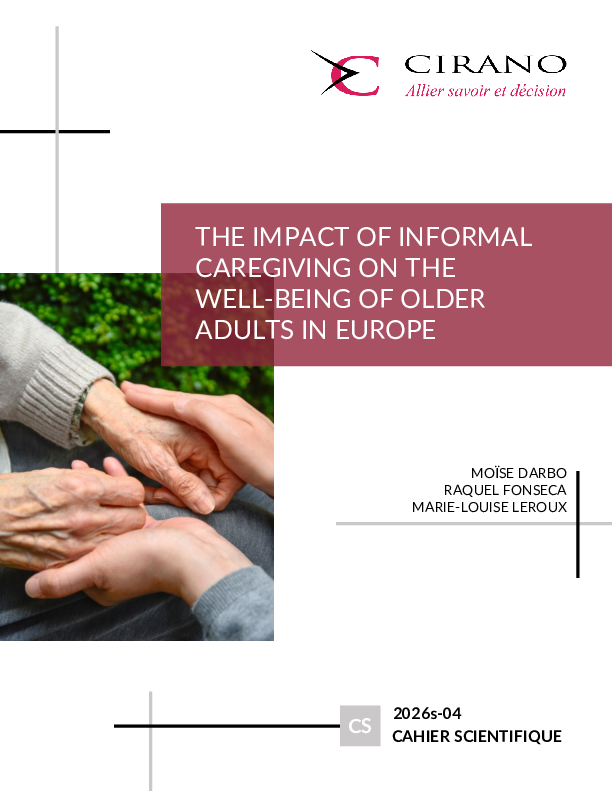
The Impact of Informal Caregiving on the Well-being of Older Adults in Europe
Informal care is a cornerstone of long-term care for older adults but may entail substantial psychological costs for caregivers.
Using seven waves (2004–2022) of the Survey of Health, Ageing and Retirement in Europe (SHARE) for 27 countries, we estimate the causal effect of providing regular personal care inside the household on depressive symptoms and quality of life.
We estimate dynamic panel instrumental-variable (IV) models with country and wave fixed effects, exploiting the persistence of caregiving and using lagged indicators of caregiving provision as instruments to address reverse causality and unobserved heterogeneity. Our baseline estimates indicate that providing informal care increases depressive symptoms by about 25% and reduces quality of life by roughly 6% relative to non-caregivers. These adverse effects are strongest for spousal caregivers and when caregiving is sustained over time, and they persist even after caregiving ends. Robustness checks using alternative outcomes, subsamples, and specifications suggest that the well-being costs of informal caregiving are sizable and pervasive, underscoring the need for long-term care policies that explicitly account for the mental health burden placed on family caregivers.