0.050.09975 0

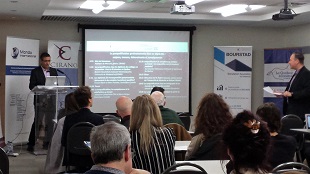
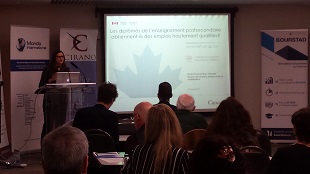
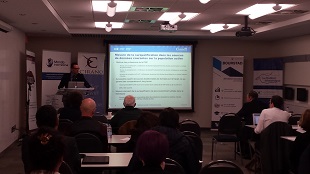
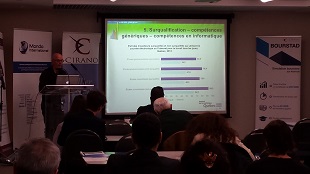
Conference: Professional Overqualification of Graduates - Issues, Measurement, Determinants and Consequences

CIRANO

Monday 24 Apr 2017
From 8:30AM To 3PM

Event organized in collaboration with


Canada's population is increasingly educated, which has a positive impact on the skills of the workforce. In 2011, 52% of adults aged 25 to 64 had a college or university degree. However, one-third of these graduates would be over-qualified for their jobs, that is, they would be working in positions below their qualifications. This raises the question of whether overqualification represents a waste - at least in part - of the considerable resources that society devotes to education. Moreover, since the skills of overqualified workers are not fully utilized, the national productive potential would be underutilized, which is inefficient. On a personal level, overqualification may become a source of frustration and low motivation, as it is often associated with lower pay and less use of skills acquired in school. Organizationally, overqualification increases turnover, resulting in costs to hire and train new employees.


What are the determinants of overqualification? What is the impact on overqualified workers? How does Quebec compare to the rest of Canada and what policies could mitigate the phenomenon?

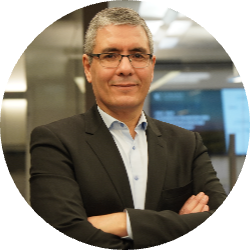
Brahim Boudarbat

A CIRANO Researcher and Fellow since 2004, Brahim Boudarbat is Full Professor in the School of Industrial Relations of the Université de Montréal. He is also Director of the Observatoire de la Francophonie économique de l'Université de Montréal, a Fellow of the Institute of Labor Economics (IZA) and a member of the Expert Committee of the Labour Market Information Council.

Holding a Ph.D. in Economics from the Université de Montréal, he is interested in issues related to immigration, post-secondary education, income inequality and working conditions of Canadians. In particular, his research interests and work focus on the integration of immigrants into the labour market in Quebec and Canada, career choices by young Canadians, income distribution, income gaps between men and women, the return on education, overqualification in the job, the use of languages at work and their remuneration in Quebec, the brain drain, indicators of job quality. He is also interested in the education and vocational training systems and youth employment in Morocco.

Brahim Boudarbat is the author of numerous articles and reports on the labour market. He has conducted studies for several organizations, including the Quebec Ministry of Immigration, Diversity and Inclusion, Emploi-Québec, the Commission des partenaires du marché du travail (Quebec) and Human Resources and Skills Development Canada. He also participated in the drafting of the 2016 Arab Human Development Report for the United Nations Development Program (UNDP).

Prior to his current position, Brahim Boudarbat was a postdoctoral researcher and lecturer in the Department of Economics at the University of British Columbia (UBC). He was also Director of the Data Centre of the Université de Montréal, a member organization of the Quebec Inter-University Centre for Social Statistics (QICSS). From 1991 to 1998, Brahim Boudarbat was responsible for employment policies and the monitoring of the professional integration of graduates within the Ministry of Vocational Training in Morocco.

[ - ]
[ + ]

Maude Boulet

A CIRANO Researcher since 2018, Maude Boulet is Assistant Professor at the École nationale d'administration publique.

Holding a Ph.D. in Industrial Relations from Université de Montréal, she is a specialist in employment equity. She is particularly interested in issues related to immigration, women's participation in the labour market and the aging workforce.

[ - ]
[ + ]

Luc Cloutier-Villeneuve

Luc Cloutier-Villeneuve is Analyst in Labour Statistics at the Institut de la statistique du Québec.

[ - ]
[ + ]

Nathalie De Marcellis-Warin

Nathalie de Marcellis-Warin joined CIRANO in 2000 as a postdoctoral researcher and was appointed President and CEO in 2016, after serving as Vice-President from 2008 to 2016. Since 2011, she has led the CIRANO Barometer project on risk perception in Quebec, which annually collects data on Quebecers’ concerns regarding 47 major societal issues. She is also Head of the CIRANO Research Pole on the Socioeconomic Impacts of Digital Intelligence and Principal Investigator of the Innovation and Digital Transformation research theme.

She is a Full Professor in the Department of Mathematics and Industrial Engineering at Polytechnique Montréal, where she also serves as Academic Director of PolyFinances. In addition, she is a Visiting Scientist at the Harvard T.H. Chan School of Public Health and an Associate Researcher at the Institute for Data Valorization (IVADO).

She holds a PhD in Management Science (specializing in risk management and insurance) from the École normale supérieure de Cachan. Her research focuses on risk management and decision-making in contexts of risk and uncertainty, as well as the design and evaluation of public policies. Her work combines economic analysis, cost-benefit analysis, survey data analysis, and more recently, large-scale unstructured data analytics.

In 2008, she founded the RISQH network, a knowledge-sharing and awareness network dedicated to risk management, patient safety, and quality of care in healthcare institutions. She contributed to the development of the Montreal Declaration for a Responsible Development of Artificial Intelligence.

She serves as Scientific Director of the Measurement Tools, Monitoring and Surveys Division at the International Observatory on the Societal Impacts of AI and Digital Technologies (OBVIA). She is also co-founder of the International Francophone Network on Scientific Advice (RFICS).

At CIRANO, she leads and contributes to several large-scale research initiatives, notably the creation of an economic digital twin of the St. Lawrence–Great Lakes region (GVCdtLab), developed in collaboration with the federal government.

She has published numerous scientific articles, several books, and more than 40 reports for government and other organizations. She has delivered over one hundred conferences and is regularly invited to speak in the media.

[ - ]
[ + ]

Kristyn Frank

[ - ]
[ + ]

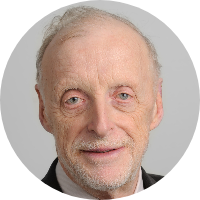
Robert Lacroix

Robert Lacroix holds a bachelor's and master's degree in economics from the University of Montreal and a doctorate from the University of Louvain (Belgium). He was a professor in the Department of Economics at the University of Montreal from 1970 to 2006.  He held various positions at the university, including director of the Department of Economics and director of the Centre for Economic Research and Development (CRDE).  From 1987 to 1993, he served as Dean of the University's Faculty of Arts and Sciences, and from 1994 to 1998, he was President and CEO and co-founder of CIRANO. Robert Lacroix was Rector of the University of Montreal from June 1998 to May 2005. He was appointed Professor Emeritus of the University of Montreal in May 2006 and first Rector Emeritus of that institution in May 2011. 

Robert Lacroix is the author of numerous books, book chapters, scientific articles, and research reports on labor economics and human resources, as well as on the economics of technical progress and innovation. Two of his books were finalists for the Donner Prize, in 2010 (Le CHUM, une tragédie québécoise, Boréal, Louis Maheu, co-author) and in 2015 (Les grandes universités de recherche, Presses de l’Université de Montréal and Leading Research Universities in a Competitive World, McGill-Queen’s University Press, Louis Maheu, co-author). In 2019, he published Grandeurs et misères de l’université québécoise (The Greatness and Misery of Quebec Universities), Presses de l’Université de Montréal, and in 2023, La sous-scolarisation des hommes et le choix de profession des femmes (The Under-Education of Men and Women’s Career Choices), Presses de l’Université de Montréal, C. Haeck, C. Montmarquette, and R. Tremblay, co-authors. 

He is an Officer of the Order of Canada, an Officer of the National Order of Quebec, an Officer of the Ordre des palmes académiques de France, a Member of the Royal Society of Canada, and a Member of the Académie des Grands Montréalais (Commander of the Order of Montreal). 

In 2001, he received the Outstanding Career Award from the National Policy Research Initiative (Ottawa) and, in 2002, he received the Armand-Frappier Award from the Government of Quebec in recognition of his outstanding contribution to the field of research administration and promotion. In 2006, he received the Order of Merit from the Association des diplômés de l'Université de Montréal.

He holds honorary doctorates from the University of Lyon 2, McGill University, the University of Western Ontario, the University of British Columbia, and the University of Ottawa.

Robert Lacroix was a member of the board of directors of the Association of Universities and Colleges of Canada (chair 2001-2003), chair of the Conference of Rectors and Principals of Quebec Universities (2003-2005), member of the boards of directors of Polytechnique-Montréal and HEC-Montréal, founding member of the board of directors of the Trudeau Foundation, and member of the board of directors of the Chamber of Commerce of Metropolitan Montreal.

A recognized specialist in human resources economics and innovation, Robert Lacroix has been called upon to serve on numerous organizations related to his expertise, notably as Vice-President of the Canadian Economics Association (in 1985); President of the Association des économistes québécois (in 1992); member of the National Statistics Council of Canada; member of the Advisory Committee on Economic Growth of the Canadian Institute for Advanced Research (from 1989 to 1994); member of the Board of Directors of the Institute for Research on Public Policy (from 1994 to 1998);  member of the Scientific Committee of the Killam Foundation of the Canada Council for the Arts (from 1984 to 1987); Member of the Comité des hommes d’affaires pour la relance économique de Montréal (Committee of Businessmen for the Economic Recovery of Montreal); member of the steering committee of the Centre d’étude sur l’emploi et la technologie (Center for the Study of Employment and Technology) of Emploi-Québec; member of the Advisory Committee on Academic Affairs of the Canadian Bankers Institute; member and chair of the steering committee of the Foundation for Educational Exchange between Canada and the United States (Fulbright Program). In 2005-2006, he was a member of the Expert Panel on the Federal Government's Equalization Program. From 2007 to 2011, he was a member of the Public Service Advisory Committee appointed by the Prime Minister of Canada.

His economic expertise and experience in managing a large organization have led him to serve on the boards of directors of major companies, including Industrial Alliance, CAE, Groupe Jean Coutu and Pomerleau Inc.

[ - ]
[ + ]

Sébastien LaRochelle-Côté

[ - ]
[ + ]

Claude Montmarquette

CV 

A CIRANO Researcher and Fellow from 1994 to 2021, Claude Montmarquette was Emeritus Professor in the Department of Economics at the Université de Montréal.

Holding a Ph.D. in Economics from the University of Chicago, he held the Caisse de dépôt et placement du Québec Chair in Experimental Economics at the Université de Montréal and was President and CEO of CIRANO for more than seven years.

Over the course of his career, Professor Montmarquette has been a visiting professor at several universities. He has chaired and participated in numerous committees for the Government of Quebec and has served on many others, both nationally and internationally. He was an elected Fellow of the Royal Society of Canada (1998) and a Member of the Order of Canada in 2013. He also received the Queen Elizabeth II Diamond Jubilee Medal the same year. Claude Montmarquette received an honorary Doctor of Laws degree from McGill University in 2013. In 2016, he was appointed Commander of the Order of Montreal. In 2019, he was named an Officer of the Ordre National du Québec and received the Gérard Parizeau Prize for his work in educational economics.

He is the author or editor of 11 books, 90 scientific articles, and more than 60 public policy papers.

[ - ]
[ + ]

Mircea Vultur

A CIRANO Researcher and Fellow since 2013, Mircea Vultur is Full Professor at the Urbanisation Culture Société Research Centre of the Institut national de la recherche scientifique (INRS).

He is also Associate Professor in the Department of Sociology at Université Laval, co-responsible for the International Research Committee on the Sociology of Work affiliated with the International Association of French-Speaking Sociologists and responsible for the Work and Professional Integration axis at the Observatoire Jeunes et Société.

Holding a Ph.D. in Sociology from Université Laval, his current research focuses on the professional integration of university graduates and the phenomenon of overqualification.

He has been a visiting professor at several European and South American universities (Université Paris-Dauphine, Université de Bretagne Occidentale, UniLaSalle, Université d'Aix-Marseille, Université de Luxembourg, Federal University of Santa Catarina, University of Porto Alegre).

He is the author or coordinator of eight books including La signification du travail (2010 prize of the Fédération francophone des affaires). Among his latest books: La surqualification au Québec et au Canada (dir., Québec, PUL, 2014) and Les agences de travail temporaire : leur rôle et leur fonctionnement comme intermédiaires du marché du travail (codir. J. Bernier, Québec, PUL, 2014).

[ - ]
[ + ]

Program

8:30 - 8:55
Welcome
8:55 - 9:00
Welcoming Remarks
9:00 - 9:45
Overqualification of College and University Graduates: The State of Play in Quebec
9:45 - 10:30
Are Postsecondary Graduates Getting Highly Skilled Jobs?
Kristyn Frank
10:30 - 10:45
Break
10:45 - 11:30
Overqualification, Skills and Job Satisfaction
Sébastien LaRochelle-Côté
11:30 - 12:15
Overqualification and Skills Used at Work: Do the Overqualified Always Lose?
Luc Cloutier-Villeneuve
12:15 - 13:15
Lunch
13:15 - 13:45
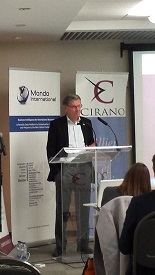
Address by Mr. Robert Lacroix, former Rector of the Université de Montréal and CIRANO Fellow / Introduction by Claude Montmarquette
13:45 - 14:30
Overqualification of Immigrants and Visible Minorities
14:30 - 15:15
Overqualification: An Analysis from the Business Perspective
15:15 - 15:15
Closing Remarks

Location


1130 Rue Sherbrooke O #1400, Montréal, QC H3A 2M8, Canada